Humans have always had a special relationship with the moon. Starting way back in 1,800 BCE with the ancient Mesopotamians, almost all cultures that have walked this planet have found the sun, the moon and the stars to be part of their cultures and closely related to them representing symbols and ideals that reflect shared human experiences. Eventually the tide shifted from myths and fables to science and a longing to learn more about it. As astronomy and technology developed, so did an interest in the celestial bodies that surround earth.
On April 1, almost 50 years after NASA’s last crewed mission to the moon, the United States took another historical step in that direction by launching three NASA astronauts, commander Reid Wiseman, pilot Victor Glover, mission specialist Christina Koch, and Canadian Space Agency astronaut Jeremy Hansen into space through NASA’s Artemis II mission. Their objective? To slingshot around Earth and reach the far side of the moon and back whilst testing out life support systems and other space science objectives that could improve the process of going to space for humans in the future. But as the crew made their way to Launchpad 39B at the Kennedy Space Center in Florida, the mission quickly turned into something much more than just science.
As hundreds of people gathered to watch Artemis take off, thousands more were watching from the variety of streaming networks that NASA was officially monitoring, along with the news outlets that were covering it separately. At 6:35 EDT, hundreds of thousands of people from around the world held their breath as 5.75 million pounds of rocket was shot off the ground. Four diverse astronauts were sent further than any human has gone before. For a moment, borders and colors fell away as humanity stood together to send off this group.
One way that this was made apparent was through NASA’s conscious effort to live stream the entire mission for free on NASA’s Youtube channel. Civilians sitting at home could follow along and listen in on all the communications between Integrity, the name of the spacecraft given by the crew themselves, and the mission control center in Houston. They were able to watch as the astronauts went about their daily life. They were able to witness the moon growing bigger and then smaller again. They could feel as if they were in that small spacecraft, packing billions into a space the size of two minivans. They laughed along when the crew made jokes, they sang along to the wake up songs played every morning, they celebrated with the newly dubbed “moon joy” when a new discovery was made, they felt the frustrations of the astronauts when equipment malfunctioned and they cried with the team when they named a crater after Reid Wiseman’s late wife Carroll. As time passed on, it became clear that the people who were sent up on that rocket were no more than ordinary people, just like us on Earth.
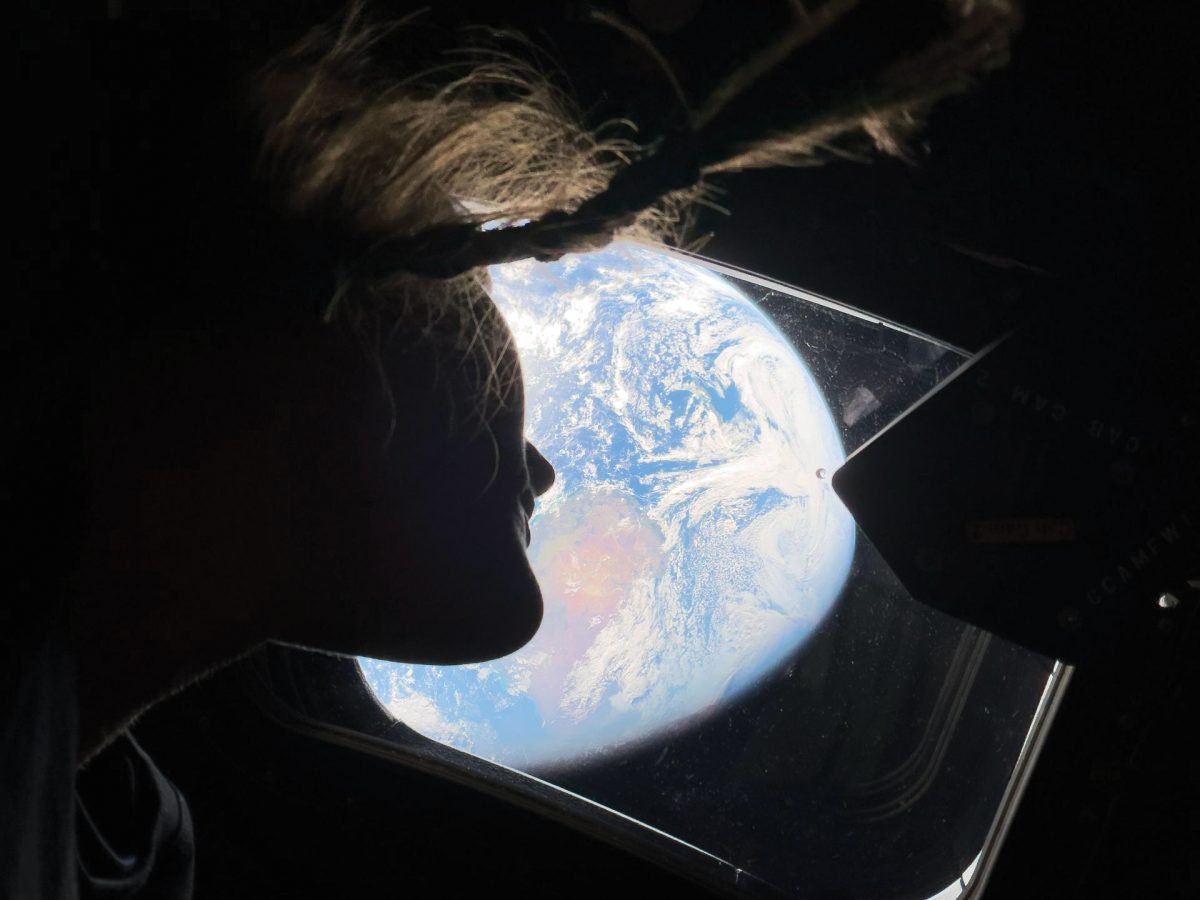
On top of that, the unfathomable things that the crew were not only able to witness, but capture and send down to Earth almost immediately put a whole new perspective on how we viewed ourselves. Less than 48 hours after launch, an image entitled “Hello, World” flooded the internet. Reid Wiseman’s photo depicted the entire Earth in the blackness of space. We had a new image that represented all of us. As quoted by Instagram user rebmasel, “Every person who has ever existed is in this photo. Every person you have ever loved is in this photo. Every person you’ve ever known or met or talked to or walked past in your entire life is in this photo.” People were once again seeing how important it was to take care of their planet and to take care of the people living inside of it, because for now it is all we have.
Another lesson the crew taught us as they made their way towards the moon and farther than any human has gone before, is the importance of having a good team. Through effective communication, understanding and passion for science the four formed a uniquely human bond that they now mention will last for a long time. The four successfully splashed down off the coast of San Diego not only having learned lots about the moon, but also about Earth and how incredibly powerful humanity is.
So, as we continue navigating the tough landscape of our world, it’s crucial to look up at what these four people were able to do and remember the powers that make us fundamentally human. We need to remember the greatness that can come when we can work together, like what the astronauts and mission control were able to do and consider the perspective of all of us being together on this planet we call Earth.