“Why do we have to have LGBTQ+ representation in all of the shows? … Like, we know y’all are there, but y’all are trying to normalize it.”
TikTok creator brokenwifi101 presents this as a casual complaint about a popular show. However, it is rarely just about television. The comment reflects a deeper attempt to dictate where queer people are allowed to exist. The word normalize is framed as a threat, a reminder that queer people can exist, just not too openly, not too often and definitely not in a way that feels normal.
This framing strips away the meaning of representation. Ocean Vuong, a queer Vietnamese writer, said “Being queer saved [his] life.” Vuong explains that queerness is often portrayed as deprivation, when for him it demanded innovation. It pushed him to imagine and create new paths in a world not designed for people like him.
Representation does not simply “include” people, it makes them feel normal.
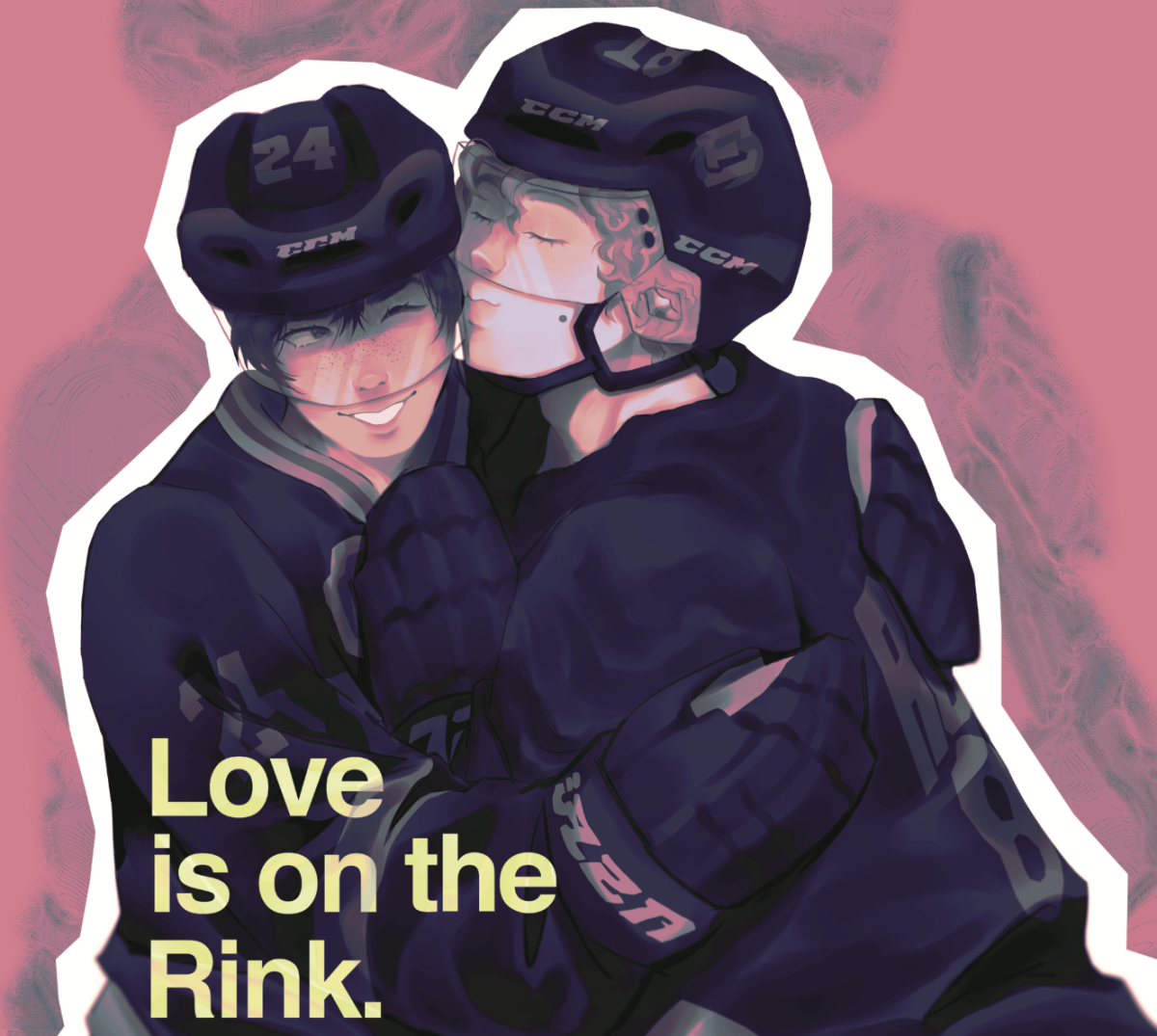
It is easy to see how “Heated Rivalry” has resonated with such a large audience. Adapted from a novel into a television series, “Heated Rivalry” is a queer love story set within one of the most culturally straight spaces: elite men’s hockey. The series follows Shane Hollander and Ilya Rozanov, two of the most talked-about professional ice hockey players who are rivals on the ice but lovers in secret.
The show does a beautiful job of revealing how the closet truly feels. Being closeted is more than secrecy; it is a desperate form of survival. Shane and Ilya begin to minimize their relationship because they are constantly monitoring themselves, what they say, how much time they spend together, how they interact, where they place their hands and even how close they can stand.
Later, the storyline introduces Scott Hunter, a respected veteran player and team leader who appears to have his life together. He meets Kip Grady, a smoothie shop barista, and quickly develops genuine feelings for him. As their relationship grows more serious, unresolved tension emerges.
Despite his security and status, Scott remains closeted. As the relationship continues, Kip becomes drained from guarding their love, even from his closest friends, slowly becoming a shell of himself. While Scott has kept his identity hidden for most of his life, watching the man he loves endure that same hardship brings a different kind of pain.
“When you have a secret that you work as hard as I did to protect, it’s exhausting,” Scott said. “It’s a nonstop effort, and it’s also really, really lonely.”
The burden they carry seeps into every part of their relationship. That is the reality of surviving in the closet. Queer people are forced to constantly calculate which version of themselves a room will tolerate, knowing a single moment of openness could cost them everything.
The conflict is not about love; it is about sustaining a double life. How long can someone live in secrecy before it begins to hollow them out?
Ultimately, Scott chooses himself. He chooses to live in his truth rather than continue hiding. “Fear is powerful,” Scott recounts, “but then I found the one thing that is more powerful.” When Scott kisses Kip on the ice after a championship win, the truth becomes impossible to ignore, breaking the expectation of straightness.
The kiss becomes breaking news, but for Shane and Ilya, it’s much deeper. It becomes proof that the world doesn’t instantly collapse when the truth is shared. After years of loving each other in secret, the possibility of being seen finally feels real.
The series’s most painful moment follows shortly after when Shane speaks to his mother. “I need you to know that I did really try [to be straight],” he says. “I tried really hard, but I just can’t help it. And I’m sorry.” The line is devastating because it captures the shame queer people are taught to carry—the belief that identity must come with an apology.
What Scott’s visibility does for Shane within the story, “Heated Rivalry,” has done for people in real life.
In January 2026, hockey player Jesse Kortuem came out publicly and credited “Heated Rivalry” for giving him the confidence to do so.
In his post, Kortuem described his internal battle with coming out, writing, “For a long time, however, the rink did not feel like a place where I could be all of me. I felt I had to hide parts of myself for far too long…As a young teenager, I carried a weight that did not seem to fit into that world, and I lived in a constant state of dichotomy. I loved the game, but I lived with a persistent fear. I wondered how I could be gay and still play such a tough and masculine sport.”
“Heated Rivalry” offers proof that queerness doesn’t negate greatness or success. When that visibility exists in the media, it carries into real life. It reminds people that they are not alone and makes stepping forward feel possible. “Heated Rivalry” will not dismantle homophobia, but the conversations and the people inspired will be the start.
This representation matters at college campuses, especially at UTD.
Queer students aren’t confined to one major, one organization or one “type.” They are athletes, researchers, leaders, friends and the people holding communities together. Representation matters because it shows that queerness doesn’t only belong in the spaces where people expect it to.