Correction: A pervious version of this article misstated the office that partnered with the Legislative Affairs Committee. The “Know Your Rights” event was hosted by the Legislative Affairs Committee in partnership with the Office of Immigrant and Citizenship Services.
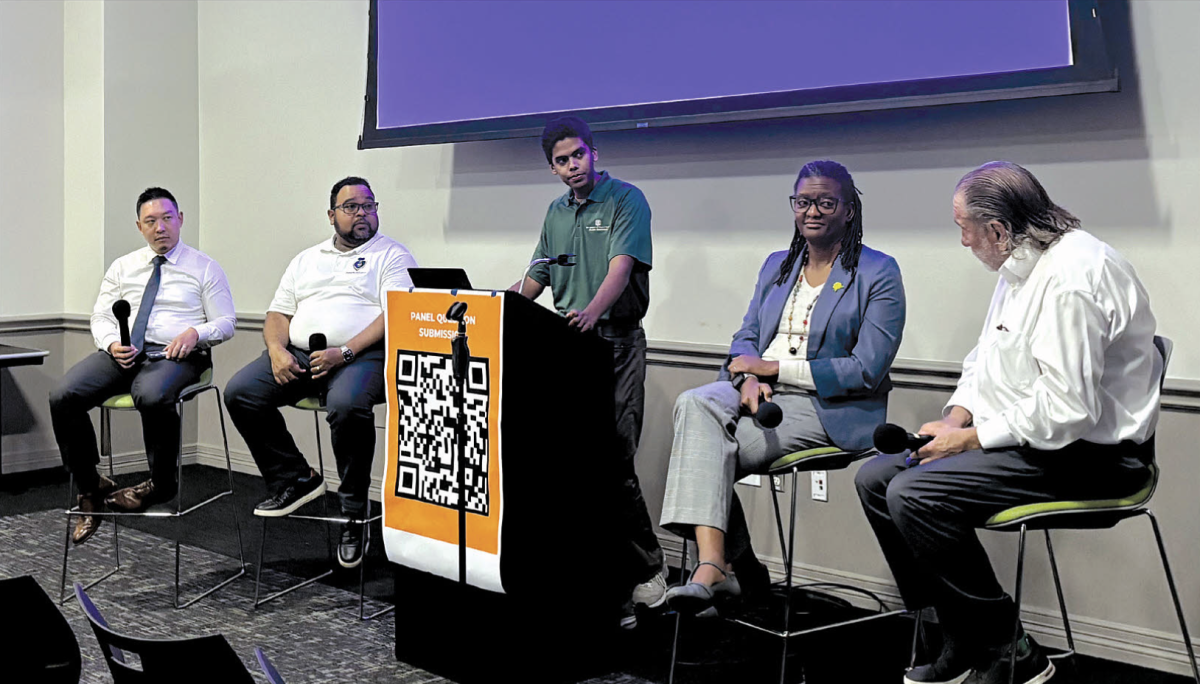
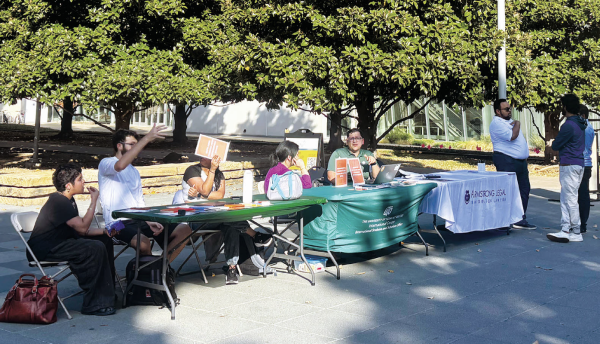
On Nov. 17, Student Government hosted an immigration resources event to address growing anxieties among the international student population at the University of Texas at Dallas. Held in partnership with the Office of Immigrant and Citizenship Services and local immigration attorneys, the two-part event began with a tabling session at the Chess Plaza featuring informational booths from student organizations, followed by a panel discussion in the Galaxy Rooms.
Legislative Affairs Committee Chair Tanay Shrivastav said there were a series of policy changes and enforcement actions that concerned students, such as reports of ICE detentions and proposed H-1B restrictions. Shrivastav noted a feeling of uncertainty students face, saying, “People don’t know what their future is going to look like.”
Immigration lawyer David Swaim urged students to avoid relying on online forums when navigating immigration rules and concerns. “The vast majority of what you see online is probably made up,” Swaim said.
The panel responded by offering legal advice to questions students submitted through a QR code on the podium.
Students submitted questions expressing fears about being deported after minor legal interactions.
Josephine Vitta, senior director for immigration programs at the ISSO, clarified that visa revocation alone does not remove a student’s legal status in the United States.
“…the fact is that the revocation of the visa does not change your underlying immigration status. It has the same effect as if your visa had expired in terms of your ability to remain in the United States. So, the visa in your passport being revoked in the database of the department state does not, by itself, make you deportable,” Vitta said.
She emphasized that students should not leave the U.S. without proper legal guidance if they receive a visa revocation notice because it would complicate reentry. Immigration attorney Robert Armstrong warned, “Increasingly, over the last couple of years, we’ve heard reports that DHS and ICE are using sophisticated computer systems and programs and AI to scrub people’s arrest histories from the FBI.”
Beyond enforcement actions, attorneys also addressed questions and confusion surrounding a proposed $100,000 fee tied to the H-1B work visa process. Swaim explained that the fee would only apply in cases involving workers applying from abroad through specific outsourcing companies, and not to students currently in the U.S., with some rare exceptions.
“The bottom line is, if you’re in the U.S., it doesn’t apply to you, so don’t worry about it,” Swaim said.
However, the panelists noted that the policy is still taking shape, meaning students could experience unexpected obstacles before any proposal is finalized or enforced. Armstrong stressed the importance of seeking qualified legal assistance when navigating these changes.
Students also asked questions about OPT, STEM extensions and long-term residency pathways. Attorneys explained that students cannot simply extend F-1 status to keep working once their authorization expires.
“You’re not going to wake up one morning and your STEM has expired and you’re in the middle of your green card process,” Swaim said, noting that plans should be made years in advance.
Students can transition directly from F-1 student status to a green card without securing an H-1B visa first. However, in most cases, according to Armstrong, the process takes longer than a student’s work authorization allows.
(Jane Burkhardt)
Vitta said U.S. immigration policy places strict emphasis on maintaining an academic purpose, rather than solely preserving employment. This means new degree enrollment must be pursued for educational advancement, not as a way to stay employed in the United States, according to Vitta.
Students also raised concerns about increased interactions with immigration authorities. Vitta emphasized the importance of staying prepared for any unforeseen circumstances. She recommended that students keep copies of essential documents and supply important documentation to emergency contacts in Orion.
Vitta also encouraged students to save the ISSO emergency hotline so they can contact immigration advisors outside regular operating hours.
Swaim said students should be mindful of the types of content and information stored in their devices.
“Assume at any time they’re going to see everything you have on social media… even private issues,” Swaim said.
The panelists said that every student’s case is different – even a single detail can change a legal outcome. They urged students to consult immigration professionals and avoid sharing personal details or relying on unverified guidance from social media platforms.
Shrivastav said even students who are not directly affected by immigration policies can support their peers by directing them toward official resources such as the Office of Immigrant and Citizenship Services.
With several federal immigration proposals still under review, Shrivastav said the Student Government organized the event to ensure students have access to verifiable legal advice. The attorneys remained in Galaxy Room C to answer more questions, and students were provided with contact information from participating law offices, Tidwell, Swaim & Farquhar, P.C.