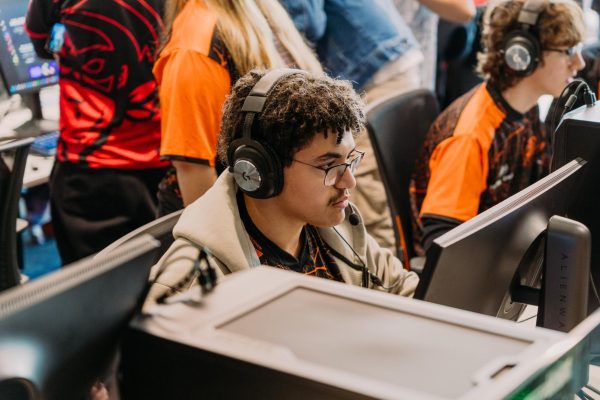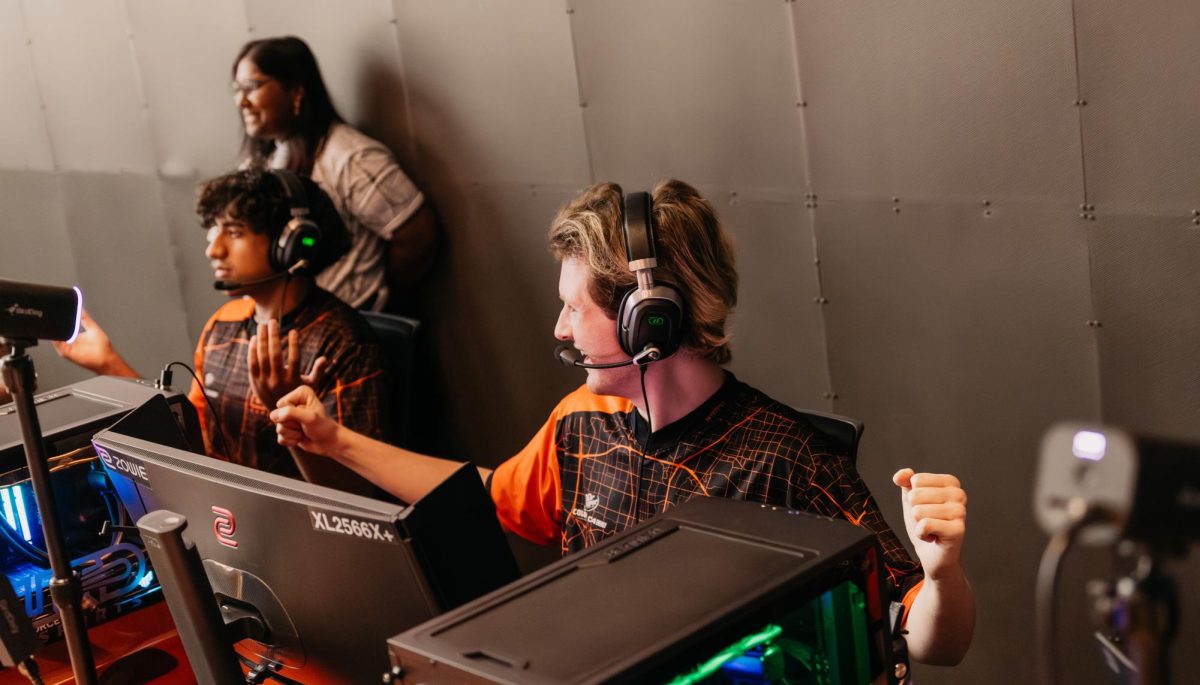
UTD launched its esports program in 2018 and was part of an early movement toward establishing collegiate esports programs in the U.S. Today, the program includes five year-round varsity teams, including Rocket League, Overwatch, League of Legends, Valorant and Super Smash Bros. Ultimate.
The varsity teams operate similarly to traditional sports and UTD provides players with jerseys, practices, necessary equipment, a dedicated team room and competitive matches and tournaments. Varsity players are eligible for scholarships, and the department covers travel, tournament entry fees, and gear, so there are no membership or participation fees for rostered players.
Varsity teams are typically small and competitive, with teams only taking around six or seven players, depending on the team.
Alex Kunz, varsity Overwatch team manager, captain and player, said rosters are usually small and selective.
“For games like Overwatch, Valorant and League, most teams look for around six to eight people on the roster,” Kunz said, adding that Rocket League typically fields four players while Smash rosters hover around seven or eight.
Arya Gowdar, League of Legends team manager, captain and player, said applicants submit player profiles and applications are typically gated at Masters rank or higher.
Benjamin Tracy, Smash Bros. team manager and player, said he came to UTD for the competitive esports program. Since joining, he has come to appreciate the family-like dynamic within the program.
“My favorite part has to be the friendships that I’ve made.”
— Benjamin Tracy, Smash Bros. team manager
“My favorite part has to be the friendships that I’ve made. We are such a close team, and it only amplifies every time we travel together or we hang out with each other after games,” Tracy said.
Applications are available through the esports Discord with tryouts typically held during the first few weeks of school, according to Drew Boehm, esports coach. Kunz said the exact length of tryouts depends on the game and how many players apply, with larger games like Valorant and League sometimes running longer than others.
Beneath the varsity squads is a network of student-led clubs, such as Counter-Strike: Global Offensive, Call of Duty, Rainbow Six and Apex Legends, that also compete in collegiate tournaments with university support. According to Boehm, esports staff meet regularly with club presidents to help plan event logistics, and in some cases, cover tournament fees or reserve practice space. Students who don’t make varsity teams still have the opportunity for competitive play on these club rosters.
Whether you compete on a club or varsity team, or are just looking to game casually, the award-winning Comets LANding is UTD’s dedicated esports facility with more than 100 PCs plus console setups. This space is free for all students, who can simply log in and play.
According to Boehm, more than 5,000 unique students used the facility over the past academic year alone. The facility hosts events ranging from weekly Smash tournaments to large-scale events like the Texas Collegiate Invitational.
“It’s been a complete game changer,” Boehm said. He added that many gaming communities previously “existed in this internet world” without a suitable space on campus.
For students not interested in gaming, paid opportunities for broadcast production, photography and video editing are other ways to get involved.
Alex Stenman, gaming and esports facility and production coordinator, said that the creative staff is split into two halves: the social and creative side and the broadcast production side. The social and creative side manages social media, video content, graphics and photography for official esports channels. The broadcast team operates the seven-seat control room to broadcast to Student Union screens and Twitch and YouTube.
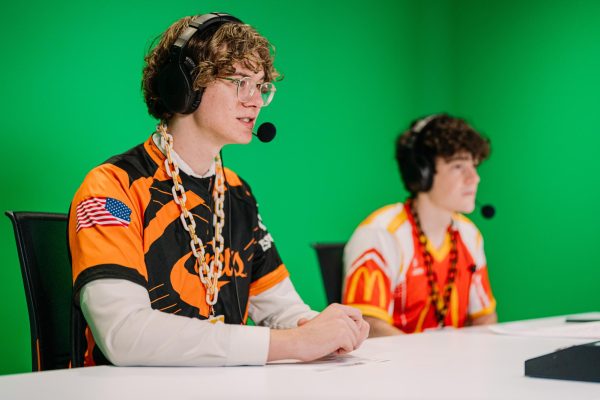
Student employees typically work between 10 and 20 hours per week, depending on how many events and broadcasts are scheduled. Stenman described the work as hybrid, with in-person meetings and access to software on computers in the Student Union for graphic design and broadcast work, while some tasks can be completed from home.
Stenman said prior job experience isn’t required for these roles.
“The number one thing I look for is somebody that’s passionate, cares, shows up and tries their hardest and is willing to take feedback and learn,” Stenman said.
He said that while all creative staff positions are paid, esports also offers “non-paid opportunities … for students to try it out” if they want to see what the work is like before committing to a staff job.
Brooke Hudy, a recent UTD graduate and former senior photographer reflected on her past two and a half years on the creative team.
“I’d say it’s really fun, and it’s also really rewarding … you kind of just have to step out and be comfortable with being uncomfortable,” Hudy said.
Stenman said there are eight available creative staff positions with job postings expected to go up in the July and August window. These jobs will be promoted on esports social media and campus screens.
While esports is often viewed as isolating and impractical among other stereotypes, Tracy, Gowdar and Kunz reject these ideas.
“It helps to teach you how to communicate and work with people and regulate your emotions, and it’s super helpful for the workforce,” Gowdar said.
The esports program has also received national recognition, with several students being nominated for individual awards that will be presented by the National Association of Collegiate Esports this July. These UTD student finalists have the opportunity to be recognized for excellence in leadership, broadcasting, production, planning and marketing.
Whether interested in gaming or participating in a creative capacity for esports, players and faculty stress there are opportunities for students to get involved everywhere, and it’s not as intimidating as it may seem.
“The vast majority, if not almost everybody, is going to have very limited experience … it’s not complicated enough, both on the social and broadcast production side, that somebody couldn’t learn and master these skill sets,” Stenman said about students interested in joining the creative team.
Tracy encourages students to check out esports, even if they aren’t ready to fully commit.
“Just come check [esports] out. Come see the arena and the facility, knock on the team room door, ask someone how they like UTD esports, ask how you can be involved. We’re not hidden away on campus … you lose nothing at all.”