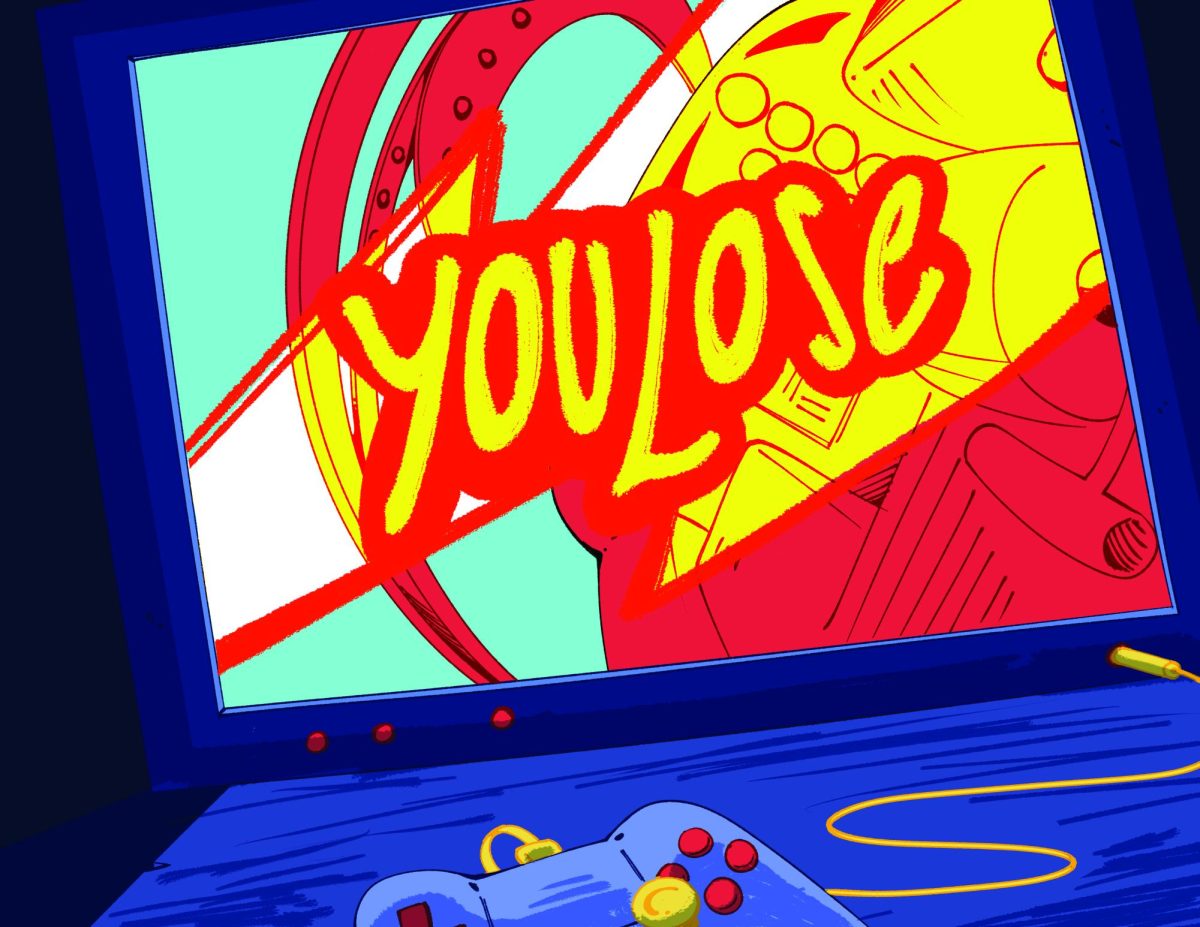
Over 3,000 people in Iran alone have been killed, and the official response from the U.S. government is SpongeBob edits.
The Trump administration’s responses to an active war have been deeply disturbing and critics have condemned the posts as propaganda, saying they trivialize an active conflict.
The meme-ification of this war is not random. It reflects a government that knows this war is getting harder to justify, so it offers a spectacle. The videos are a desperate plea to garner any crumb of public support for a war that polls say remains wildly unpopular. A PBS News/NPR/Marist poll found that a whopping 56% of Americans oppose U.S. military action in Iran.
That doesn’t mean intervention in Iran had no justification. The Iranian people have faced years of repression, and their suffering should not be ignored.
In January 2026, Iranian security forces massacred thousands of civilians in a crackdown on the largest Iranian protests since 1979. HRANA published a full report in February 2026, including a detailed list of 7,007 deaths. The desire for something different in Iran is not a Western projection. It is the documented result of decades of state violence. The idea of liberation is not wrong. In fact, it is necessary.
But the U.S. version of “liberation” has a paper trail.
In 1953, the CIA and British intelligence engineered the removal of Mohammad Mosaddegh, Iran’s democratically elected prime minister, after he moved to nationalize the country’s oil supply. What replaced him was the Shah.
What the Shah built — with American funding and training — was a secret police force that tortured political prisoners in facilities the U.S. helped design. A senior CIA officer, according to Congressional testimony, was involved in instructing Iranian officials on those techniques. The revolution that eventually removed the Shah produced the Islamic Republic being bombed today.
The current Iranian government is a consequence of the last time America decided it knew what was best for Iran.
It is no question that the people of Iran deserve better. But it is important to understand what “better” has historically cost the people it was supposed to serve and why a government flooding your feed with hype edits probably does not want you thinking about that too hard.
“When American service members killed in action are returning to the United States in flag-draped coffins, and others have lost limbs or suffered devastating injuries, this White House treats war like a game, and it’s a disgrace,” Sen. Jon Ossoff said.
We should be questioning how much blood is being shed, how much information is actually being shared and why international coverage often looks so different from what we are being shown here.
War is not a game and when a government packages war as entertainment it is asking for your blind acceptance.
“War is not a game.”
Sen. Jon Ossoff said this after the White House portrayed the war with Iran like a video game, as if he had to remind people that real lives are at stake.
As disturbing as that is, the real scandal is not the edits themselves, it’s what they are hiding.
On the first day of strikes, Feb. 28, a U.S. missile hit the Shajareh Tayyebeh girls’ elementary school in Minab, a city in southern Iran, during the school day. The roof collapsed on the students, killing over 150 civilians, with over 100 being children, according to Amnesty.
The same day the White House was posting hype edits, Secretary of Defense Pete Hegseth announced airstrikes would intensify, telling reporters U.S. forces were delivering “death and destruction from the sky all day long.”
“[The government doesn’t] want people to think, ‘This is a very serious issue where people are dying, and it’s unjust,’” Arienne Ferchaud, an associate professor at Florida State University, told USA Today.
The absence of humanity is not an oversight.
A government that starts selling war with memes and middle school “red pill” content is trying to condition you, lowering your reaction to what you are watching until it feels normal.
In recent posts, President Donald Trump has said, “a whole civilization will die tonight, never to be brought back again” — rhetoric so extreme it echoes ethnic cleansing.
What started as Israeli-U.S. strikes in late February has spilled beyond the battlefield. Oil prices have exploded as threats in the Strait of Hormuz, a route that carries a significant portion of the world’s oil, have intensified. Ships have already been forced to turn back and global markets are in panic and the effects are reaching everyday life. According to BBC, Sri Lanka has gone so far as to implement a 4-day workweek to conserve energy due to these shortages.
War does not stay on a screen. It shows up in people’s wallets, homes and futures.
The meme-ification of this war is not random. It reflects a government that knows this war is getting harder to justify, so it offers a spectacle. The videos are a desperate plea to garner any crumb of public support for a war that polls say remains wildly unpopular. A PBS News/NPR/Marist poll found that a whopping 56% of Americans oppose U.S. military action in Iran.
That doesn’t mean intervention in Iran had no justification. The Iranian people have faced years of repression, and their suffering should not be ignored.
In January 2026, Iranian security forces massacred thousands of civilians in a crackdown on the largest Iranian protests since 1979. HRANA published a full report in February 2026, including a detailed list of 7,007 deaths. The desire for something different in Iran is not a Western projection. It is the documented result of decades of state violence. The idea of liberation is not wrong. In fact, it is necessary.
But the U.S. version of “liberation” has a paper trail.
In 1953, the CIA and British intelligence engineered the removal of Mohammad Mosaddegh, Iran’s democratically elected prime minister, after he moved to nationalize the country’s oil supply. What replaced him was the Shah.
What the Shah built — with American funding and training — was a secret police force that tortured political prisoners in facilities the U.S. helped design. A senior CIA officer, according to Congressional testimony, was involved in instructing Iranian officials on those techniques. The revolution that eventually removed the Shah produced the Islamic Republic being bombed today.
The current Iranian government is a consequence of the last time America decided it knew what was best for Iran.
It is no question that the people of Iran deserve better. But it is important to understand what “better” has historically cost the people it was supposed to serve and why a government flooding your feed with hype edits probably does not want you thinking about that too hard.
“When American service members killed in action are returning to the United States in flag-draped coffins, and others have lost limbs or suffered devastating injuries, this White House treats war like a game, and it’s a disgrace,” Sen. Jon Ossoff said.
We should be questioning how much blood is being shed, how much information is actually being shared and why international coverage often looks so different from what we are being shown here.
War is not a game and when a government packages war as entertainment it is asking for your blind acceptance.