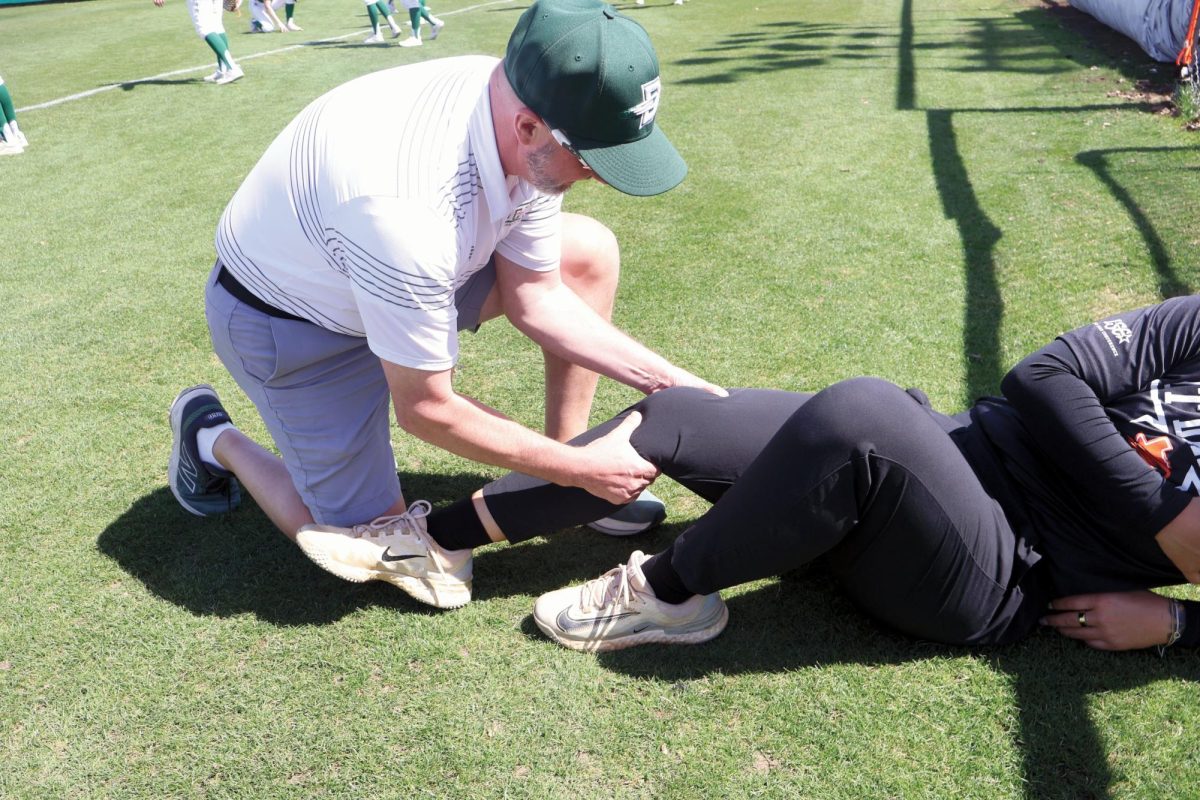
Inside the athletic training room, one student-athlete ices her ankle, not because of a major injury, but out of precaution. For sophomore cross country runner Grace Youngblood, visits like this are part of her routine.
“I was just in a little bit of pain, and icing it, making sure it wasn’t anything serious,” she said.
What might seem like a quick stop for treatment is actually part of a complex support system that aims to keep UTD athletes performing at their best.
Athletic trainers play a critical role in college athletics that extends far beyond treating injuries. While many limit their job to taping ankles or responding to emergencies on the field, athletic trainers at UTD work closely with student-athletes in recovery, prevention and even mental health. During Athletic Training Month, their role is becoming more visible beyond the sidelines.
One of the biggest challenges athletic trainers face isn’t just long hours or demanding schedules, but how their profession is perceived. The term “trainer” often leads to confusion, with many people associating it with personal trainers or strength coaches rather than medical professionals.
“The biggest misconception is that we’re strength and conditioning coaches or personal trainers,” said head athletic trainer Josh Dreher. “But our expertise is really in the medical side of athletics — prevention, care and rehabilitation of injuries.”
Unlike strength coaches who focus solely on performance, athletic trainers wear a multitude of hats: diagnosing injuries, creating rehabilitation plans and ensuring athletes return safely to play.
Athletic training also extends beyond collegiate and professional sports. Athletic trainers can now be found working in hospitals, physical therapy clinics, corporate offices and industrial settings, preventing workplace injuries and improving overall health.
“You can find athletic trainers in factories, offices, the military, hospitals … not just traditional sports settings,” said assistant athletic trainer Margarita Carrizales.
Though many still associate the profession strictly with athletics, it has now evolved into a broad healthcare field.
For student-athletes, the depth and importance of this emerging role has become clear at the collegiate level. Youngblood said her understanding of athletic trainers completely changed after arriving on campus.
“I thought people only went to athletic trainers for injuries in high school … but in college they’re a big part of recovery too,” she said.
She also reflected on the increased demands of college athletics, where maintaining a peak physical condition is just as important as recovering from injuries — both things that athletic trainers are deeply involved in.
At UTD, the athletic training room isn’t just for injured athletes, it’s also a daily resource. Many athletes come and go through the clinic’s doors for preventative care, with athletic trainers providing compression boots, ice baths and cupping therapy. These daily check-ins with athletic trainers help student-athletes stay ahead of potential injuries and provide a safe environment.
The need for this kind of support becomes even more apparent when comparing Division II college athletics to high school sports. The physical and mental demands significantly increase, pushing athletes to new limits.
“When you come to college everything goes up. You have to adapt more — doing recovery, eating more, sleeping more,” Youngblood said.
Athletic trainers play that key role that athletes need to make that transition, ensuring they can handle the increased workload.
Behind the scenes, that support system starts early in the day and continues on late into the night, often in between weeks of traveling.
“I get here at 6 in the morning … get student-athletes ready for practice, taping, set up water and then handle emails and everything else,” said Dreher.
From preparing athletes for practice to managing their administrative duties, athletic trainers’ responsibilities are numerous and diverse.
For Carrizales, who works primarily with the UTD baseball team, the schedule is just as demanding.
“From 9 a.m. to 1:30 p.m., I’m performing manual therapy, doing rehabs and checking in with doctors … then I go out to cover practice and sometimes stay after for recovery sessions,” she said.
Her day doesn’t just revolve around one team. She also supports athletes from multiple sports, balancing a wide range of responsibilities.
With so many athletes to care for and administrative tasks to complete, time quickly becomes the biggest challenge, said Dreher.
“Time is the biggest thing. Sometimes it takes 12 to 16 hours a day,” Dreher said.
Despite these challenges, athletic trainers must constantly prioritize and adapt to ensure every student-athlete receives proper care.
When injuries do occur, athletic trainers are responsible for guiding athletes through every step to full recovery. Each stage in the process often involves crucial decisions to be made that balance the athlete’s desire to return quickly and their long-term health.
“We’re medical advisors, we lay out the positives and drawbacks and help guide them on what path they want to take,” Dreher said.
However, recovery isn’t just physical — there’s a mental part that runs deep. For many athletes, being sidelined can affect their sense of identity.
“They tie their identity a lot with the sport they play … if they’re not out there, they start questioning their worth,” Dreher explained.
Carrizales has seen similar struggles, emphasizing that “there’s a psychological component, sometimes they don’t fully trust their body yet.”
Building that level of trust requires more than medical knowledge. Athletic trainers must form strong connections on a personal level with the athletes they work with.
“I care about them beyond what they can do on the field … I see them as people first,” Carrizales said.
These relationships are often the piece that makes the training room a place where athletes feel comfortable both physically and mentally.