“All of Iran is like my family.”
This was how one Iranian student at the University of Texas at Dallas described why they joined the dozens of protestors at a demonstration opposing the Islamic Republic as protests and government crackdowns continue in Iran.
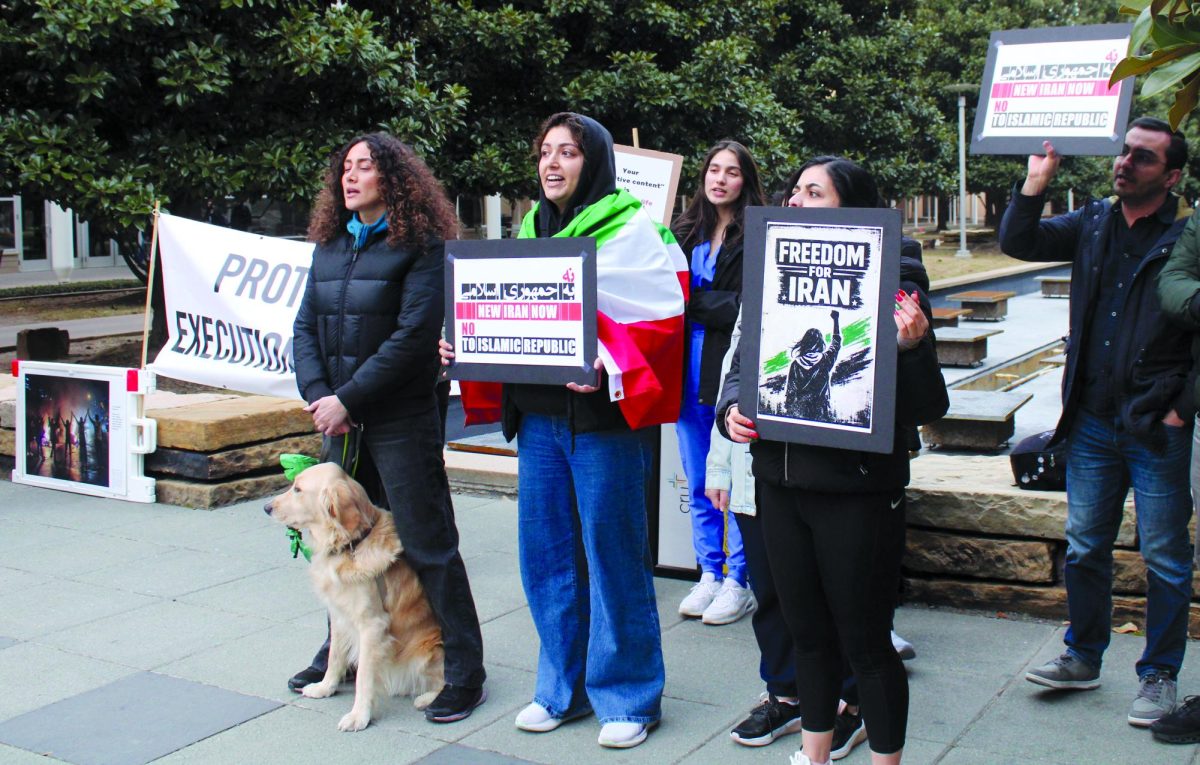
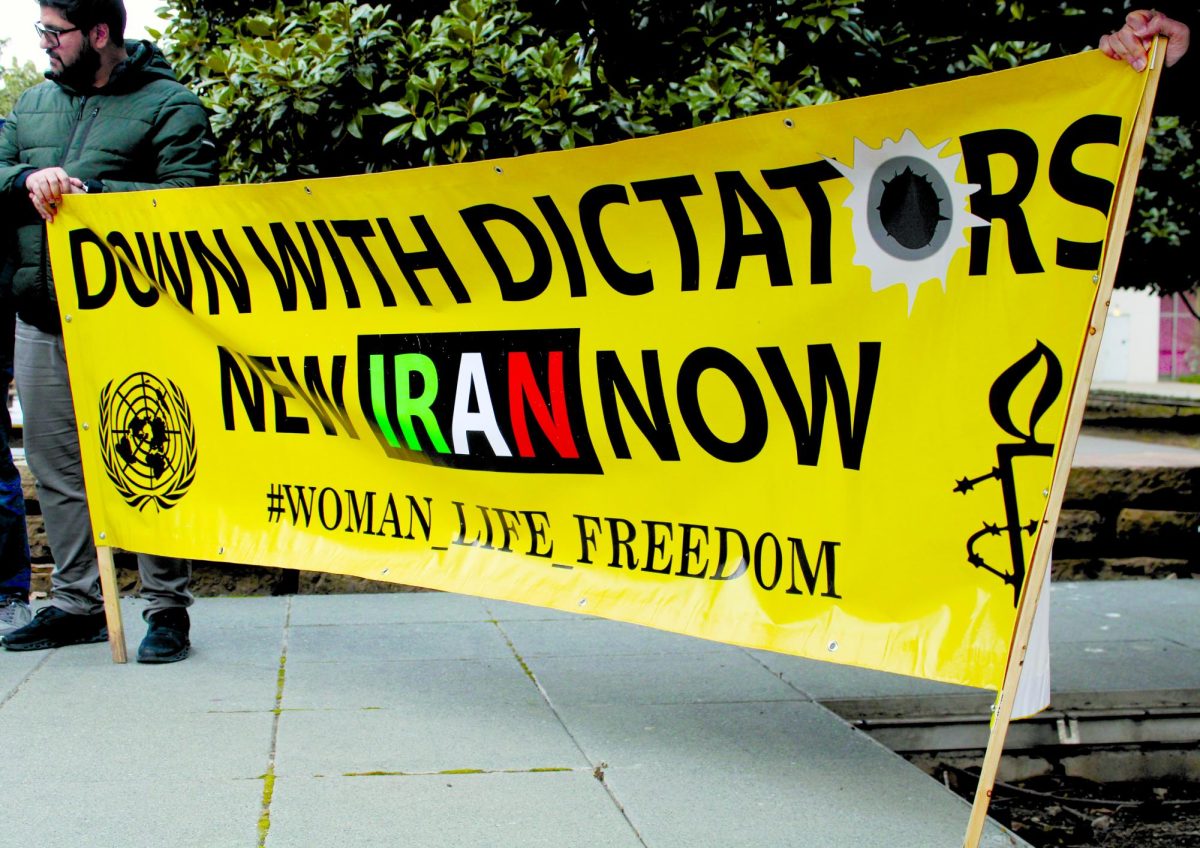
The demonstration, held at the Chess Plaza on Tuesday, Jan. 20, featured chanting, speakers and attendees holding Iranian flags. Signs calling attention to violence, an internet blackout and suppression of dissent in Iran were arranged on tables and across the plaza. The event was hosted by the Iranian Student Community, or ISC, and the Dallas Persian Association.
Organizers said the demonstration was held in response to ongoing protests in Iran and the government’s violent crackdown on demonstrators, including shootings based on beliefs, mass arrests and country-wide internet shutdowns.
Mojan Hakim, a local Iranian activist and member of Iran’s Voice DFW, said that the event planning began about a week in advance and included securing permits, distributing flyers and communication with UTD to avoid disrupting classes.
Hakim described the gathering as a peaceful, nonviolent event meant to inform as well as protest.
“We’re trying to bring all of the Iranian students together in protest, but we’re also bringing awareness to other students on campus,” Hakim said.
Hakim said that four main takeaways from the event were to raise awareness by posting on social media, contacting local representatives and encouraging them to take action and attend future protests. “The bigger the crowd, the louder the noise,” Hakim said.
While organizers emphasized awareness and advocacy, students in attendance said their motivations to protest were personal. Several Iranian students interviewed for this article were granted anonymity due to putting family members in Iran at risk.
One student said she had not seen her immediate family in over two and a half years and relied on daily video calls to stay connected. After the Iranian government shut the internet down on Jan. 8, 2026, that connection was abruptly severed.
“Everyday I called them. That was the only thing I had. It’s such a basic thing that they took away from us,” the student said.
Another protestor said communication with family members is now limited to brief phone calls initiated from inside Iran, with calls being carefully monitored. “The government monitors communication,” the student said. “We can only say, ‘Don’t worry. Don’t think about us. We’re OK.’”
Students said that these fears extend beyond phone calls, and they affect what they feel safe sharing publicly, even while living in the United States.
One student said friends, including Iranian students studying abroad, are hesitant to post on social media or publicly support protests out of concern that their online activity will be tracked and used against family in Iran.
“Even some students in the US are scared to repost, leave comments, share stories or share beliefs. The government has strong propaganda outside of Iran,” said the student.
Students said that the violence they witnessed in Iran continues to shape their fear and urgency to speak out abroad. Several students described being targeted by security forces during protests, regardless if they were actively demonstrating.
“They shot at students for protesting,” one student said. “We hid inside an apartment. They didn’t care who it was. Even if you are a normal person, they will shoot at you. They don’t think. They just act.”
The student added that the aftermath of crackdowns is hard to forget. “It’s in the road. You can see blood.”
The student said that those enforcement actions along with the recent internet shutdowns make it difficult for many Iranians to safely communicate information outside of Iran, increasing the necessity to spread awareness.
Arian Saber, a junior studying healthcare studies said that it impacted his identity as well.
“It’s sad to think we have one of the oldest countries with such a history but our people are fleeing from their own country. You can’t call Iran your home. You can’t call here your home. So where is your home?”
Saber said he hopes for a future in which Iranians no longer have to choose between safety and identity.
He said, “I would love for Iran to have its identity back.”