
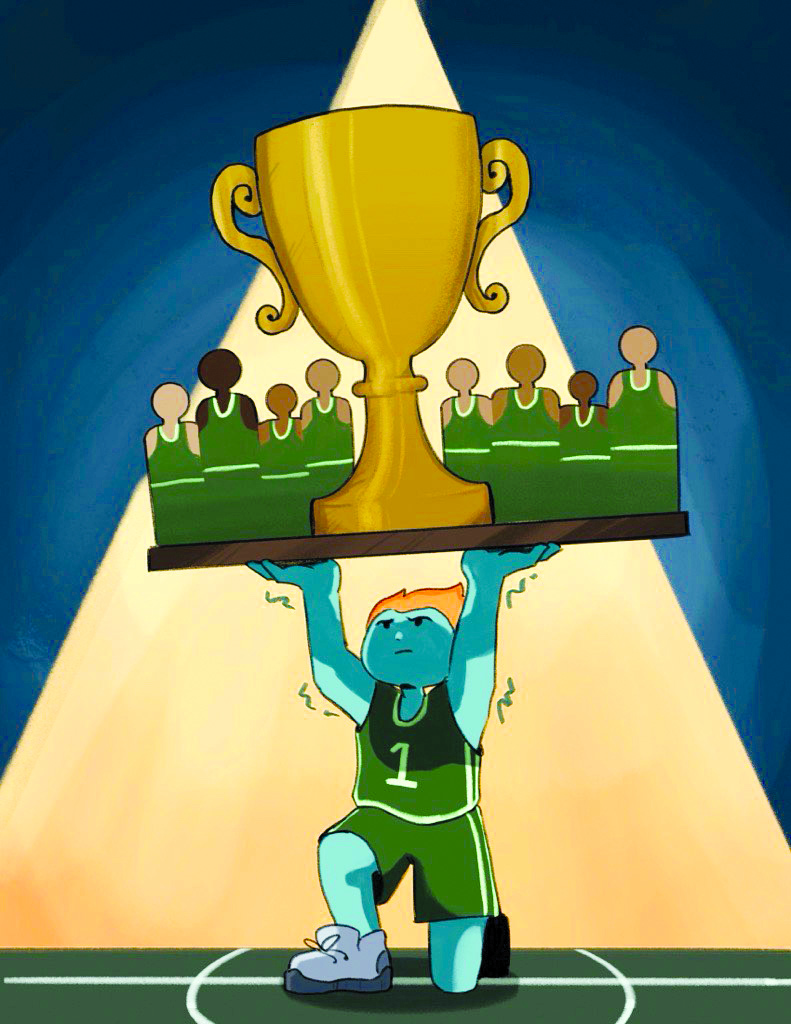
When most people think about student-athlete burnout, they picture the obvious: early-morning practices, long bus rides, tight muscles and the familiar grind. But for many athletes at The University of Texas at Dallas, the real exhaustion comes from a job no one put in the playbook, holding an entire team together emotionally.
It’s the kind of labor that never appears on stat sheets or leaderboards. No one reports it to coaches. No one announces it over the speakers. Yet in baseball dugouts, on track lanes and across soccer fields, athletes take on roles far beyond the sport: counselor, hype person, mediator, teacher, and sometimes the only person keeping the morale from collapsing.
For Sam Webster, a junior on the UT Dallas baseball team, this invisible job starts the moment the game slows down. “During long innings, if the vibes are low it can get quiet,” he said. “Coaches harp on staying on a set level even when things aren’t going our way.”
In those moments, Webster is determined to keep the energy alive: cracking jokes, shutting down negativity and stopping complaints before they spiral. Not because anyone told him to, but because someone has to.
“I take responsibility in those spaces: practice, dugout, the bus,” he said. “Nip the nagging early and try to turn it into something productive.”

Across campus, sophomore track runner Madison Avery carries a different kind of emotional weight. Track isn’t a classic team sport. When she steps onto the line, no one else can run the race for her. But that individuality doesn’t erase the pressure of showing up for the people she trains beside every day. “When my times aren’t improving, I think about my community,” she said. “I need to show up for my team if I can’t show up for myself.”
Support on the track isn’t loud or dramatic. It’s steady – encouraging teammates through grueling workouts, helping someone recover after a bad meet and being “the energetic one” even when she’s exhausted herself. Still, Avery admits there are days when loneliness hits hard.
“Sometimes it can feel isolating because it’s hard to know if people actually understand,” she said. “Everyone handles things differently.”
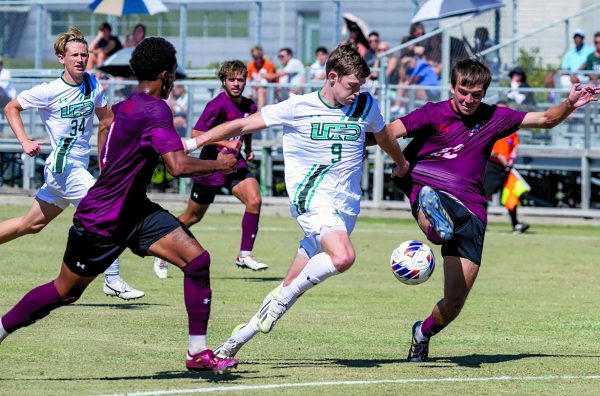
Meanwhile, on the soccer field, senior Jacob Culpepper manages emotions in real-time: 45 minutes of nonstop decisions, communication and unspoken team chemistry.
“When someone’s struggling, we all try to get behind him,” he said. “Maybe you gotta take a step up and show support through the struggle.”
Soccer’s emotional labor is fast-paced and constant. Tension over playing time. Frustration over missed calls. Conflicts that simmer long after the match ends. Culpepper says navigating those moments while keeping composure is part of the job, even if it’s a job no one officially assigned.
“It comes down to understanding what the team needs,” he said. “It’s not about personal success.”
Across all three sports, the same theme resurfaces: athletes are expected to shoulder emotional responsibilities without training, guidance or acknowledgment.
Webster said it bluntly: players are just expected to “figure it out.”
“No one really explains what that role is, and it’s constantly changing because every team is different,” he said.
As the season stretches on, that unseen work accumulates. Travel schedules get heavy. Injuries shake confidence. Practices pile on top of schoolwork. The mental load of being reliable every day, every game, every practice becomes a quiet source of burnout.
Avery calls it a “love-hate relationship” with the sport.
“When I’m physically tired, I’m mentally tired and emotionally tired, and it all kinda comes from there,” she said.
Culpepper remembers wanting to quit during his first year.
“It felt like constant impostor syndrome,” he said. “It was a bearing weight of, ‘Was I good enough?’”
Webster describes losing sleep over the pressure to stay steady for everyone else.
“You catch yourself thinking about it in class or with friends,” he said. “That’s when I’m most upset about baseball.”
It’s a demanding role, often unmentioned, but it’s also one that shapes who these athletes become long after the final whistle.
Avery says the hard moments have taught her how to handle challenges far beyond the track. “That’s when I learn the most about myself,” she said. “About how to handle things and how not to handle things.”
Culpepper found confidence in places he didn’t expect. The same pressure that once made him question whether he belonged eventually became the reason he stayed. “I look to soccer to kind of get away from schoolwork,” he said. “I can’t imagine what my life would be without it.”
Webster, who once carried the weight of every bad inning, now sees his leadership as something bigger than baseball. “My biggest goal is to make it more childlike again,” he said. “Be present in the moment … bring back the love I had when I was a kid with a wiffle ball bat in my backyard.”
Despite the pressure, the exhaustion and late-night doubts, all three athletes credit the same community around them for keeping them grounded. Their teammates notice. They lean on each other. And even when the emotional labor becomes overwhelming, they continue to show up not just for themselves, but for the people standing beside them.
Regina D Culpepper • Dec 9, 2025 at 11:01 am
Great article